
Visions and Voices
Bob Dylan Between Blake’s Prophecy and Pound’s Modernism

I. Poetry After Authority: Why Blake and Pound Matter to Dylan
Bob Dylan’s poetry emerges from a historical problem shared by both William Blake and Ezra Pound: how poetry can speak with moral authority in an age that no longer trusts inherited forms of truth. For Blake, this problem arose in the aftermath of Enlightenment rationalism and institutional religion; for Pound, it emerged amid the collapse of nineteenth-century humanism and the fragmentation of modern life. Dylan inherits this crisis at a still later stage, when mass media, commercial culture, and political exhaustion threaten to dissolve poetic seriousness altogether.
What links Dylan to Blake and Pound is not simply influence, but a shared conviction that poetry must do more than decorate experience. It must see—and must compel others to see. Yet each poet answers this demand differently. Blake grounds authority in prophetic vision; Pound locates it in formal rigor and historical excavation. Dylan stands between them, absorbing Blake’s moral imagination and Pound’s discipline of form, while correcting the excesses of both through the constraints and possibilities of song.
II. Blake’s Prophetic Imagination
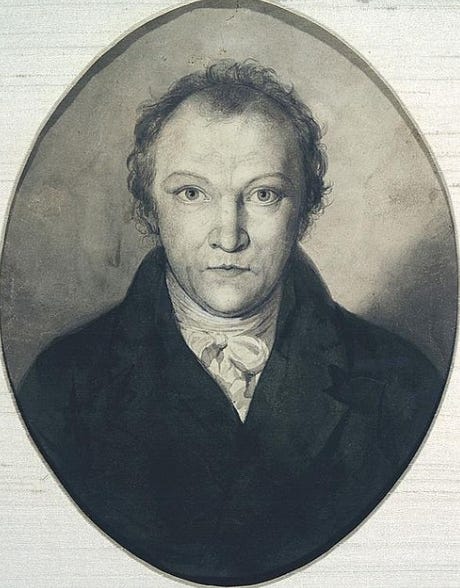
Figure 1. William Blake, Self-Portrait (c. 1802)
Blake’s poetry rests on the radical claim that imagination is not ornamental but ontological. To imagine truly is to perceive reality more fully. Prophecy, in Blake’s sense, is not prediction but revelation: the exposure of moral and spiritual conditions concealed by habit, ideology, and institutional power. His poetry operates through symbolic compression, paradox, and visionary intensity rather than through argument or narrative explanation.
Dylan’s poetry repeatedly adopts this Blakean mode of seeing. Songs such as “A Hard Rain’s A-Gonna Fall” do not persuade or instruct; they testify. The song’s cascading images—children holding weapons, poisoned waters, blood-soaked branches—do not cohere into a programmatic critique. Like Blake’s prophetic books, they overwhelm the listener with perception. The ethical demand lies not in what the song concludes, but in what it makes visible.
Both Blake and Dylan rely on paradox as a moral instrument. Blake’s assertion that “The tygers of wrath are wiser than the horses of instruction” in The Marriage of Heaven and Hell rejects the authority of moral pedagogy in favor of lived intensity. Dylan’s line “To live outside the law, you must be honest” enacts the same inversion. In both cases, virtue is detached from compliance and reattached to integrity under pressure. Paradox functions not as cleverness, but as a method of ethical clarification.
Urban space becomes a further site of shared vision. Blake’s London exposes the psychic consequences of economic and political constraint—“mind-forg’d manacles” that bind perception itself. Dylan’s “Desolation Row” constructs a similarly charged moral geography. Its grotesque parade of historical and mythical figures does not allegorize so much as diagnose a condition of cultural dislocation. Like Blake, Dylan transforms the city into a visionary space where social reality is stripped of its normalizing surface.
Yet Dylan diverges from Blake at a crucial point. Blake’s prophetic cosmology ultimately hardens into a private mythos—powerful, but increasingly opaque. Dylan resists this closure. His symbols remain unstable, open to reinterpretation through performance, voice, and historical change. Where Blake builds a system, Dylan sustains a field of tension.
III. Pound’s Modernist Discipline
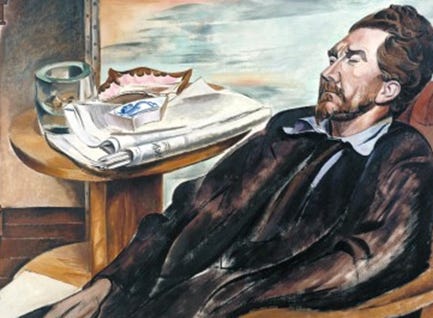
Figure 2. Wyndham Lewis, Ezra Pound (c. 1914–1915)
If Blake supplies Dylan with a model of vision, Pound supplies a discipline of form. Pound’s modernism arises from the conviction that inherited poetic language has become morally inert. The poet’s task is therefore to strip language to its charged essentials through compression, juxtaposition, and historical excavation. Meaning, for Pound, emerges not through exposition but through collision.
This principle is most clearly articulated in “In a Station of the Metro,” where two images generate insight without explanation. Pound extends this method in The Cantos, assembling fragments of myth, economics, and history into a deliberately discontinuous epic. The poem demands active interpretation; coherence is provisional and earned.
Dylan adopts this modernist logic in songs such as “Subterranean Homesick Blues” and “Desolation Row.” In these works, meaning arises through rapid juxtaposition rather than narrative development. Cultural fragments—advertising slogans, historical figures, surreal images—collide to produce recognition rather than argument. Like Pound, Dylan trusts the intelligence of juxtaposition.
Yet Dylan also corrects Pound. Where Pound’s formal rigor increasingly drifts toward opacity and ideological enclosure, Dylan’s medium imposes restraint. Song requires rhythm, repetition, and vocal embodiment. Fragmentation must remain audible. Melody forces return; performance enforces intelligibility. Dylan thus inherits Pound’s technique without reproducing his isolation. Modernist difficulty is tempered by human presence.
In this sense, Dylan resolves a central modernist dilemma. He preserves formal innovation while restoring public address. Where Pound’s poetry often demands initiation, Dylan’s invites listening, and without simplifying its moral or formal complexity.
IV. Voice, Mask, and Ethical Risk
All three poets confront the issue of poetic authority through the construction of their voices. Blake invents prophetic personae—Los, Urizen, Orc—each embodying psychic and moral forces. Pound disperses voice across languages, histories, and registers, dissolving the lyric self into polyphony. Dylan adopts a third strategy: the mask of performance.
Dylan’s shifting vocal identities—the folk prophet, the electric surrealist, the country balladeer, the religious witness—are not evasions of self but methods of perception. Each voice makes certain truths audible while silencing others. This strategy aligns Dylan with both Blake and Pound, yet remains distinct. Unlike Blake’s mythic figures or Pound’s textual collage, Dylan’s masks are enacted through breath, timbre, and presence. The human voice becomes the site of transformation.
This carries ethical risk. Performance can collapse into persona; prophecy into pose. Dylan’s achievement lies in maintaining instability. No voice becomes definitive. Authority remains provisional, earned anew with each song. In this way, Dylan preserves Blake’s moral urgency while avoiding prophetic absolutism, and he inherits Pound’s formal experimentation while resisting aesthetic enclosure.
V. Resolution Through Song
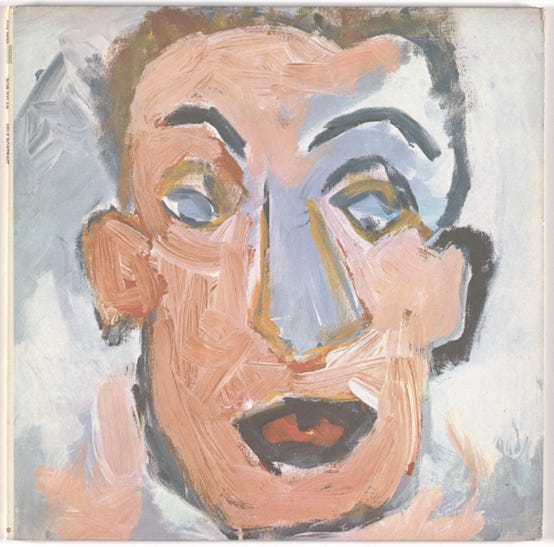
Figure 3. Bob Dylan. Self-Portrait. Work from the collection of the Museum of Modern Art (MoMA)
Dylan’s deepest originality lies not in borrowing from Blake or Pound, but in resolving tensions they leave unresolved. Blake risks mythic closure; Pound risks formal and moral isolation. Dylan avoids both by situating poetry within song—an art form that demands recurrence, embodiment, and public circulation.
Songs such as “Visions of Johanna” demonstrate this synthesis at its most refined. Surreal imagery unfolds with modernist restraint, yet remains anchored by rhythm and voice. “Tangled Up in Blue” extends modernist fragmentation into narrative time without forfeiting coherence. “Every Grain of Sand” returns Blake’s visionary attentiveness to the smallest particulars of existence, but without metaphysical system-building.
As a result, Dylan becomes what neither Blake nor Pound could fully be: a poet whose work remains both formally adventurous and publicly intelligible, morally serious and culturally embedded.
Conclusion
Bob Dylan stands between Blake and Pound not as a lesser inheritor, but as a corrective heir. From Blake, he takes the conviction that poetry must see what society refuses to see. From Pound, he takes the insistence that form itself is an ethical matter. Yet Dylan transforms both inheritances by submitting them to the discipline of song.
In Dylan’s work, prophetic imagination does not harden into doctrine, and modernist experimentation does not collapse into isolation. Vision remains open; form remains humane. Poetry regains a voice capable of speaking in public without surrendering complexity.
Dylan’s achievement reminds us that poetic tradition is not sustained by preservation alone, but by transformation. Blake and Pound do not survive in Dylan as relics or references. They survive because Dylan subjects their insights to risk—placing them in melody, breath, and performance, where they must live or fail.
In that risk lies the renewal of poetic conscience.
Works Cited
Blake, William. Songs of Innocence and of Experience. 1794.
—. The Marriage of Heaven and Hell. 1790–93.
Day, Aidan. Jokerman: Reading the Lyrics of Bob Dylan. Basil Blackwell, 1988.
Frye, Northrop. Fearful Symmetry: A Study of William Blake. Princeton UP, 1947.
Gray, Michael. Song & Dance Man III: The Art of Bob Dylan. Continuum, 2000.
Pound, Ezra. “In a Station of the Metro.” Poetry, vol. 2, no. 1, 1913, p. 12.
Ricks, Christopher. Dylan’s Visions of Sin. Ecco, 2004.
Scobie, Stephen. Alias Bob Dylan Revisited. Red Deer Press, 2003.
Thomas, Richard F. Why Bob Dylan Matters. Harvard UP, 2017.
Yaffe, David. Bob Dylan: Like a Complete Unknown. Yale UP, 2011.
Figure 1. William Blake, Self-Portrait, c. 1802. Monochrome wash on paper. British Museum. Wikimedia Commons.
Figure 2. Wyndham Lewis, Ezra Pound, c. 1914–1915. Drawing. Reproduced via Wikipedia, “Ezra Pound (Lewis).”
Figure 3. Bob Dylan. Self-Portrait. Work from the collection of the Museum of Modern Art (MoMA), New York. https://www.moma.org/collection/works/185440