Seeing as an Ethical Act
Why Looking Is Never Passive

I. The Illusion of Neutral Vision
Modern societies tend to treat seeing as a passive faculty. We speak casually of what we have “seen” as if vision were a simple transmission of information from world to mind—an optical event uncontaminated by judgment. In this everyday grammar, ethical failure is associated with action, while perception remains morally inert. Yet this assumption is philosophically shallow and historically dangerous. Seeing is never merely optical. It is structured, trained, and governed. To look is already to enter a moral relation.
Vision precedes action, but it does not precede interpretation. What we notice, what we overlook, how long we attend, and under what framing conditions are never accidental. Long before moral judgment is articulated, perception has already sorted the world into what matters and what does not. Ethical life, therefore, begins earlier than action; it begins at the level of attention itself.
It is a modern mistake to confuse epistemic neutrality with moral neutrality. That perception can register facts without distortion does not mean it does so without consequence. Attention is not merely cognitive; it is distributive. To attend to one thing is already to withhold attention from another, and this act of selection quietly allocates moral weight. Before an explicit judgment is formed, perception has already established a hierarchy of concern. What appears, what recedes, and what never comes into view at all are the earliest expressions of ethical orientation.
This essay argues that seeing is an ethical act because it participates in the organization of responsibility. Across war art, representations of poverty, and modern photography, acts of looking shape what is acknowledged, what is normalized, and what is rendered tolerable. Civilizations do not merely commit injustices; they cultivate ways of seeing that allow injustice to persist in plain sight.
II. Seeing, Power, and Moral Distance
Seeing is never symmetrical. Some look; others are looked at. This asymmetry is not incidental but structural. To see without being seen, to observe without exposure, is already to occupy a position of power. Ethical difficulties arise not primarily from ignorance, but from distance—physical, social, and moral.
Here, the work of Hannah Arendt is instructive. In The Human Condition and her later political writings, Arendt locates moral collapse not in sadism or hatred but in disengagement. Evil, she suggests, often proceeds through thoughtlessness: a refusal to judge, imagine, or attend (Arendt 1998, 5–6). What matters is not blindness, but a mode of perception emptied of responsibility.
This distinction clarifies a central ethical problem of modern spectatorship. Visibility is not equivalent to recognition. One may see suffering without registering it as morally binding. Indeed, modern societies excel at producing visibility without consequence. Images circulate, facts accumulate, and yet nothing follows. The problem is not that injustice is unseen, but that it is seen at a distance—managed, framed, and insulated from obligation.
Moral distance is rarely singular. It is layered. Physical distance separates those who suffer from those who observe; social distance insulates viewers through class, nationality, or status; and perceptual distance is produced by framing itself, by the aesthetic, narrative, or statistical forms through which suffering is rendered legible. These distances compound one another. The result is insulation: a condition in which one sees clearly while remaining untouched. Modern ethical failure often resides precisely here, in the maintenance of distance without denial.
To see ethically is not simply to observe but to confront the implications of one’s position as a spectator. Art becomes one of the primary arenas in which this confrontation is staged.
III. War Art and the Refusal of the Glance
War has always generated images, but not all war images demand ethical seeing. Heroic battle scenes, patriotic allegories, and commemorative monuments often serve to protect the viewer, transforming violence into narrative, sacrifice into meaning, and death into destiny. Against this tradition stands a darker lineage of war art that refuses to grant the spectator such distance.
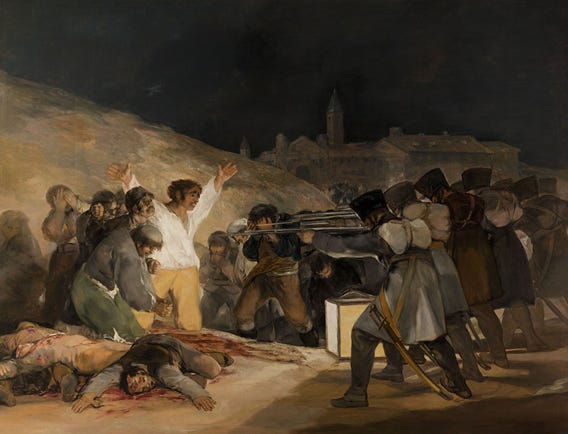
Figure 1. Francisco Goya, The Third of May 1808 (1814)
The paradigmatic figure here is Francisco Goya, whose The Third of May 1808 and Disasters of War deny the viewer the comfort of explanation or moral resolution. These images do not instruct or console. They confront. Limbs are severed, bodies exposed, faces stripped of individuality. There is no redemptive arc. The viewer is not invited to admire suffering or to interpret it within a heroic frame.
Later artists such as Otto Dix and Käthe Kollwitz extend this refusal. Their war images resist narrative closure and deny aesthetic distance. Bodies appear broken, gestures truncated, meanings unresolved. Ethical seeing here is inseparable from discomfort. The viewer cannot consume the image quickly without violating it. To look properly is already to endure.
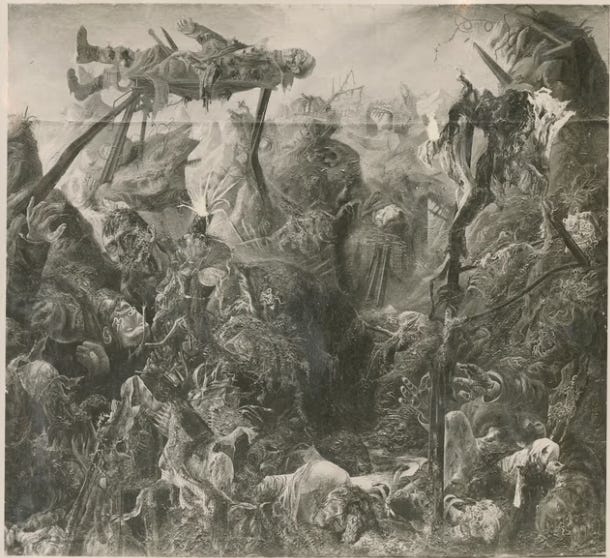
Figure 2. Otto Dix, The Trench (1923)
As Susan Sontag observes, images of war can either provoke reflection or collapse into spectacle depending on how they are seen (Sontag 2003, 84–85). War art that resists the glance transforms spectatorship into a test. It asks not what the viewer believes, but whether the viewer can remain present without retreating into abstraction or justification.
IV. Poverty and the Normalization of Suffering
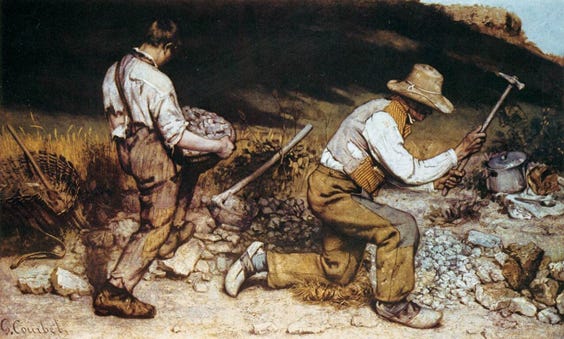
Figure 3. Gustave Courbet, The Stone Breakers (1849)
If war art confronts the viewer through rupture, representations of poverty pose a different ethical challenge. Poverty is not episodic; it is a chronic condition. Its images do not erupt; they accumulate. And it is precisely this accumulation that risks moral dulling.
Unlike war, poverty rarely announces itself as a rupture. It unfolds as continuity. Its images lack the dramatic threshold that would force moral reckoning. There is no single moment of catastrophe, only an accumulation of hunger, precarity, and exhaustion. This temporal structure is ethically decisive. What repeats without climax is easily absorbed into the background of expectation. Suffering that persists without spectacle risks being interpreted not as injustice, but as a condition. In this way, duration itself becomes a mechanism of normalization.
From nineteenth-century social realism to modern documentary photography, the poor have been repeatedly made visible. Yet visibility alone has not guaranteed recognition. On the contrary, repetition often produces familiarity, and familiarity breeds tolerance. The suffering poor become part of the background of social life—seen frequently, but briefly; acknowledged abstractly, but rarely engaged.
This dilemma lies at the heart of John Berger’s analysis of spectatorship. Berger insists that seeing is socially conditioned and ideologically trained. We do not simply look; we look from positions shaped by class, economy, and power (Berger 1972, 8–9). To see poverty without interrogating its causes is to participate in its normalization.
Ethical failure here arises not from cruelty but from habituation. The eye adjusts. What once provoked discomfort becomes ordinary. Ethical seeing, in this context, requires duration rather than exposure, time spent rather than images consumed. Without duration, visibility becomes another form of distance.
V. Photography and the Burden of Evidence
Photography intensifies the ethical stakes of seeing by claiming a privileged relationship to truth. Photographs appear to offer direct access to reality, promising evidence rather than interpretation. Yet this promise is precisely what makes photography ethically unstable.
In Regarding the Pain of Others, Susan Sontag argues that images of suffering oscillate between revelation and anesthesia. Photographs can inform, but they can also overwhelm. Repeated exposure risks transforming pain into spectacle and spectatorship into consumption (Sontag 2003, 70–71). In such cases, feeling becomes a substitute for responsibility rather than its foundation.
This instability is compounded by what John Tagg identifies as photography’s institutional character. Photographs do not merely record reality; they are produced within systems of administration, classification, and governance. These systems discipline both subject and viewer, defining what counts as evidence and who counts as a legitimate object of concern (Tagg 1988, 63–65).
Photography thus sharpens a central ethical dilemma of modern seeing: images can generate awareness without judgment, knowledge without obligation, emotion without action. The image alone cannot guarantee an ethical response. Responsibility shifts decisively to the spectator.
The ethical danger of photography lies not in falsification, but in the delegation of power. The existence of an image can function as a substitute for a response: once documented, suffering appears to be already accounted for. Evidence replaces obligation, and feeling replaces judgment. The photograph reassures the viewer that something has been registered, even as it leaves untouched the question of what, if anything, must follow. In this sense, documentation can become a technology of moral outsourcing—recording pain while quietly releasing the spectator from responsibility.
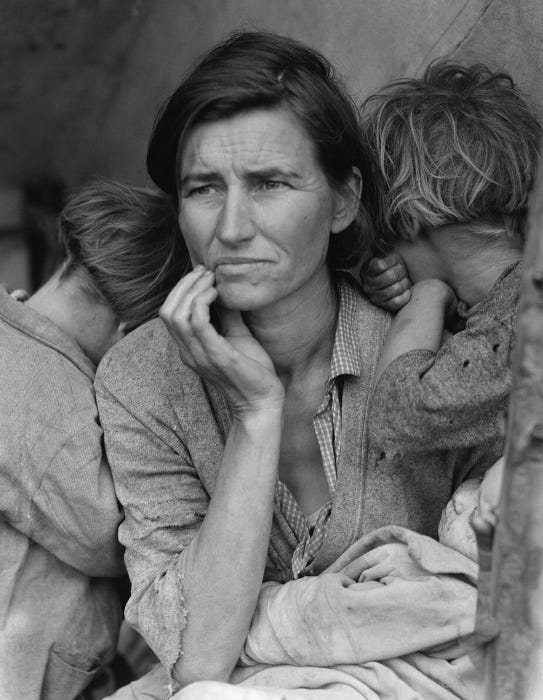
Figure 4. Dorothea Lange, Migrant Mother (1936)
VI. Spectatorship as Moral Practice
If images cannot ensure ethical response, then ethics must reside not in representation but in spectatorship itself. Seeing ethically is not a reflex; it is a practice. It requires effort, context, and self-implication.
Ethical spectatorship differs from passive looking in several ways. It involves duration rather than glance, interpretation rather than shock, and reflexivity rather than pity. Most importantly, it requires the viewer to recognize their own position within the field of vision. To look ethically is to acknowledge that one’s distance is not neutral and that one’s attention carries weight.
Here, the work of Judith Butler is especially illuminating. In Frames of War, Butler argues that not all lives are made equally visible or equally grievable. Frames determine whose suffering counts and whose remains an acceptable loss (Butler 2009, 1–3). Ethical seeing, therefore, requires interrogating the frame itself; not merely what is shown, but how and why it is shown.
Spectatorship, in this sense, becomes a moral discipline. It does not guarantee action or reform. It offers no moral innocence. But it resists the quiet ethical evasion that allows injustice to persist without resistance. It demands the courage to remain implicated rather than comforted.
VII. Civilization and the Governance of Visibility
Modern civilization governs not only through law and force, but through attention. Media cycles, algorithms, and spectacle organize what is seen, when, and for how long. Some suffering is made hyper-visible, while other suffering remains structurally invisible. Ethical blindness, in such contexts, is rarely accidental. It is produced.
Long before a society governs through law, it governs through attention. Regimes of visibility determine which harms are framed as urgent, which are tolerated as inevitable, and which never fully register as harms at all. Media systems, institutional reporting practices, and algorithmic amplification do not merely reflect moral priorities; they actively produce them. The distribution of attention functions as a form of soft infrastructure—one that shapes ethical possibility by defining what can be persistently seen, briefly noticed, or safely ignored.
Civilizations reveal their moral boundaries through patterns of visibility. What is persistently ignored, rapidly consumed, or framed as inevitable marks the limits of concern. Long before injustice is defended, it is rendered ordinary.
Seeing, then, becomes a civilizational act. How a society trains its citizens to look determines what it can tolerate. Ethical decline often announces itself first as perceptual indifference.
VIII. Conclusion
Looking is never passive. It is an act shaped by power, habit, and responsibility. To see ethically is not to see more, but to see differently—to resist distance, to endure discomfort, and to accept implication rather than retreat into neutrality.
The central ethical task, ultimately, is not the accumulation of images or information, but the cultivation of attention itself. Civilizations fail morally not only because they act unjustly, but because they learn how to look at injustice without being unsettled by it—how to render suffering familiar, distant, or administratively manageable. Long before wrongdoing is defended or justified, it is normalized through patterns of perception that dull concern and suspend obligation.
Ethical life begins before action, at the level of perception, where the world is first sorted into what matters and what does not. Learning to look responsibly is not a minor moral refinement or a private virtue. It is a demanding civilizational discipline, one that determines not only what societies condemn, but what they come to tolerate in plain sight.
Works Cited
Arendt, Hannah. The Human Condition. 2nd ed., University of Chicago Press, 1998.
Berger, John. Ways of Seeing. Penguin Books, 1972.
Butler, Judith. Frames of War: When Is Life Grievable? Verso, 2009.
Sontag, Susan. Regarding the Pain of Others. Farrar, Straus and Giroux, 2003.
Tagg, John. The Burden of Representation: Essays on Photographies and Histories. University of Minnesota Press, 1988.
Figure 1. Francisco Goya. The Third of May 1808. 1814. Oil on canvas. Museo del Prado, Madrid.
Figure 2. Otto Dix. The Trench. 1923. Oil and mixed media on canvas. Formerly Wallraf-Richartz Museum, Cologne (destroyed 1937; photograph reproduced).
Figure 3. Gustave Courbet. The Stone Breakers. 1849. Oil on canvas. Formerly Gemäldegalerie, Dresden (destroyed 1945; photograph reproduced).
Figure 4. Dorothea Lange. Migrant Mother (Nipomo, California). 1936. Gelatin silver print. Farm Security Administration collection, Library of Congress, Washington, D.C.